
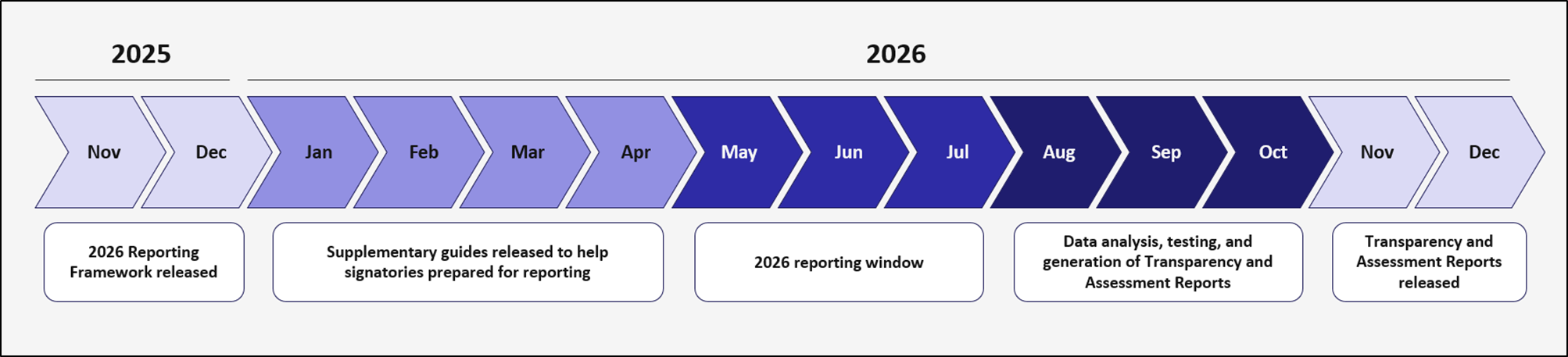
The 2026 PRI Transparency Reporting season is approaching quickly, with the reporting window opening on May 6 and closing on July 29.
PRI has undertaken a major overhaul of the Reporting Framework for 2026. Silver’s SRS Team has compiled the most significant changes, key dates and best practices to help Signatories prepare for the upcoming reporting season.
The New Framework
PRI released its updated 2026 Reporting Framework on November 4, 2025. The framework represents a significant change in the reporting process for both asset manager and asset owner Signatories.
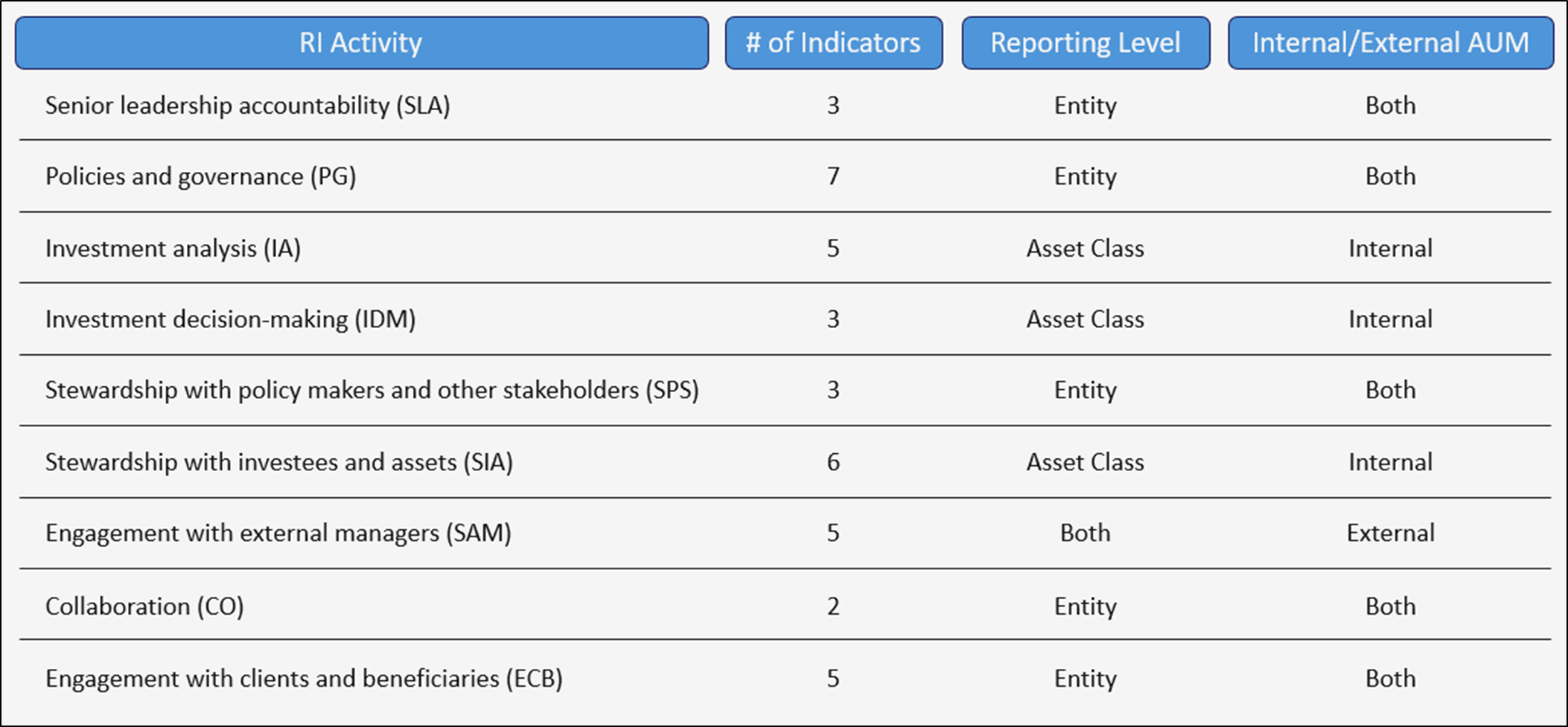
Under the new framework, Signatories will respond to a maximum of 39 indicators, compared to a maximum of 257 in previous years. Of the new indicators, 30 are derived and/or influenced by the prior framework (see the change guide here), and importantly, most responses will continue to be assessed. As in the past, Signatories can expect to receive a 1-5 star assessment, with investment-level practices segregated by asset class (see the assessment methodology guide here).
In the new framework, asset-class modules are replaced by activity areas. Activity areas marked as “Entity” will focus on a Signatory’s policies and practices, while activity areas marked as “Asset Class” will focus on a Signatory’s investment strategies, and replaces the previous asset class-specific modules.
Key Changes to the 2026 Reporting Framework
| ||
Topic | Past Framework | 2026 Framework |
Overall Requirement to Report | Voluntary for certain Signatories, depending on reporting history | Mandatory for all Signatories not in their grace period |
Voluntary Indicators | Certain indicators were marked as “voluntary” – Signatories were not required to respond | None; all indicators that are applicable to the Signatory are mandatory to complete |
Nature and Human Rights | Voluntary indicators allowing for limited information, and primarily focused on climate | Mandatory indicators requiring additional detail about nature and human rights, as well as climate |
Use of Examples | Indicators did not allow for written examples of RI practices, but were primarily “check the box” options | Six indicators require written responses detailing RI practices along with supporting examples |
Hedge Fund Assets | Hedge fund assets were reported as their own asset class | Hedge fund assets will not be reported as a standalone asset class, and AUM must be allocated to other asset classes Note: no additional guidance has been provided by PRI regarding how Signatories should determine the re-allocation of hedge fund assets |
Selection, Appointment, and Monitoring (SAM) Indicators | SAM indicators were scored separately by asset class | SAM indicators will result in one combined score, and will not be separated by asset class |
“Other” Assets | Reporting was not required for assets marked as “Other” | Assets marked as “Other” will now be reported on within asset class-level indicators but will not be scored |
Written Responses | Only select indicators had required or voluntary text fields | Every indicator allows for a voluntary written response to add context to selections |
Asset Owner Reporting | In the past, asset owner reporting was isolated to external AUM | Asset owners will now report on both internal and external AUM |
Star Score Thresholds | Star score thresholds consistent with previous years | New, specific star score percentage thresholds will not be available ahead of the reporting window closing |
Access to the Reporting Framework has changed:
PRI has developed a new portal for Signatory reporting, MyPRI. A new login process has been established to access the updated portal, and Signatories should be aware that the historic data portal will no longer be used for reporting purposes.
How to log in to MyPRI:
- The original administrator of a Signatory’s PRI account must first access MyPRI
- Once logged in, the original administrator will be able to distribute login access to additional users by following the prompts in the “User Management” dashboard
- If the original administrator is not available, access can be reestablished by contacting PRI directly at: [email protected]
A note on Pathways: in addition to the new framework, PRI has formally launched its “Pathways” initiative. Pathways have been introduced as a set of voluntary, educational tools that Signatories can use to learn about industry best practices and implementation efforts related to three different responsible investment objectives: managing risk (Pathway A), addressing system-level risk (Pathway B), and pursuing impact (Pathway C). The 2026 PRI Reporting Framework does not include indicators or other reporting obligations related to Pathways.
Key Dates and Timelines
The timeline below outlines PRI’s key milestones for the upcoming reporting period. Signatories that have reported in the past two cycles will notice that the window remains unchanged, as PRI continues to embed reporting in Q2 and Q3:
Best Practices for 2026 PRI Reporting
Silver has identified several best practices to help Signatories begin transitioning previous reporting efforts to the new framework:
- Transfer answers from the last full report to new framework – many indicators in the new framework are similar or identical to indicators from previous years (see the logic guide here). Signatories can leverage legacy responses to complete 2026 indicators
- Review changes to RI practices since the last report – legacy responses should not be used without review; Signatories should be mindful that all responses are reflective of current practices
- Identify relevant teams to collate answers – new indicators will likely require disclosure of new and/or additional information. New parties may need to be added to a Signatory’s reporting process to ensure responses are complete
- Ensure alignment with other materials – Signatories may have updated their marketing and other materials based on changes to their underlying business or RI program. Signatories should review these materials to ensure responses, including the use of the new voluntary qualitative fields, are consistent with existing disclosures
- Beware the superlative – the new voluntary qualitative fields and required examples of RI practices will allow Signatories to add additional description to the report – be mindful to avoid the use of superlative language in these text fields
- Prepare response rationales – Signatories should ensure all responses are substantiated and defensible, and the rationale for each indicator should be properly maintained
How Silver can Help: Silver works with our clients to interpret PRI guidance and draft disclosures in the context of their specific business. We work with Signatories to build a tailored approach to reporting that is representative of their RI program. Following report submission, we work with Signatories to identify areas of potential RI process and program improvement, through the lens of PRI and beyond.
If you have questions about PRI or would like to learn more about Silver’s PRI reporting solutions, please contact the Silver SRS Team at [email protected].